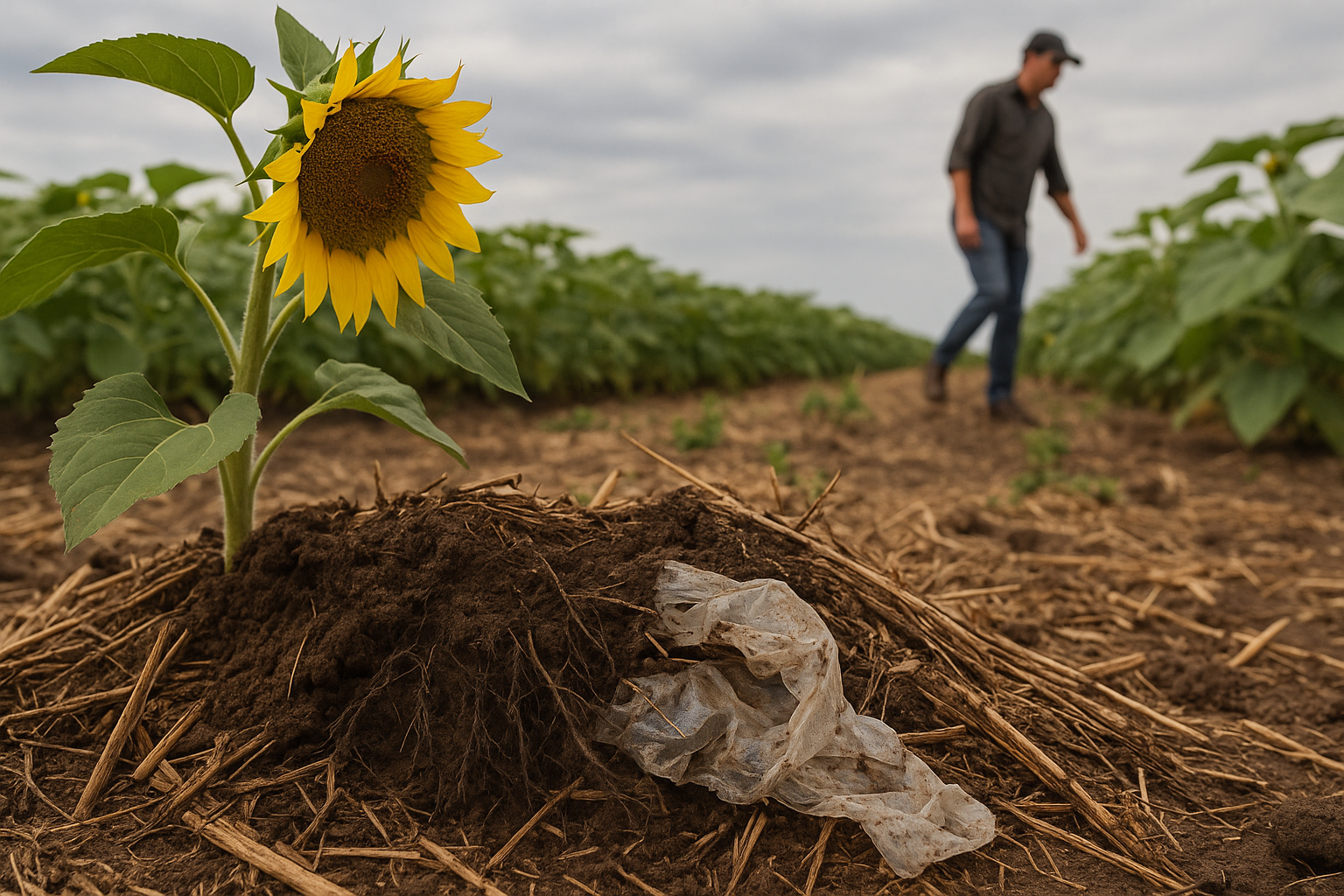
Recent research highlights a potential hidden risk in sustainable farming: microplastics shed from biodegradable plastic bags may leach into the soil, altering its physical and chemical properties. This begs important questions for crop health and long-term soil resilience.
In this article, we unpack what these microplastics might do to soil and to sunflowers, a widely grown ornamental and oilseed crop. We summarize key findings in accessible terms and offer practical takeaways for farmers and agronomists seeking to safeguard soil quality.
Soil implications of microplastics from biodegradable bags
Biodegradable plastic bags are designed to break down faster than conventional plastics, but their fragments can still become soil particles. Microplastics influence soil texture, porosity, and water retention, potentially changing aeration and root penetration. They may also interact with soil minerals and organic matter, altering nutrient availability and microbial communities that are essential for nutrient cycling.
How plastics change soil properties
Small plastic fragments can clog pore spaces or modify soil structure, affecting drainage and water-holding capacity. Depending on size and concentration, these particles can shift the balance of soil microhabitats, with consequences for beneficial soil organisms and root growth.
Sunflowers under microplastic stress
The study demonstrates that soils contaminated with microplastics from biodegradable bags can trigger stress responses in sunflowers. Plants may show altered growth patterns and heightened stress signals, likely driven by changes in the root-zone environment, including moisture dynamics and microbe interactions. While the exact mechanisms require further study, the implications for yield and crop quality are relevant for risk assessment in sustainable crop production.
Farmers may notice slower early growth, changes in leaf coloration, or shifts in flowering timing when soils host microplastic particles, depending on local conditions and plastic load.
Practical steps for farmers
To minimize risk, reduce reliance on single-use plastics in farming operations and consider alternatives like reusable or compostable bags with verified end-of-life pathways. Build soil resilience through practices that support soil structure and biology, such as cover crops, minimal tillage, and organic amendments. Regular soil testing helps detect shifts in texture and moisture behavior that could signal microplastic influence.
Monitoring and management tips
Monitor soil texture, water infiltration, and microbial activity where bag-use is common. If microplastic ingress is suspected, adjust irrigation, drainage, and crop rotation plans to preserve soil health and sunflower vigor.
Protecting soil health is essential for resilient sunflower production and a sustainable farming future. Consider evaluating plastic use on the farm and adopt practices that keep soils vibrant and productive for years to come.