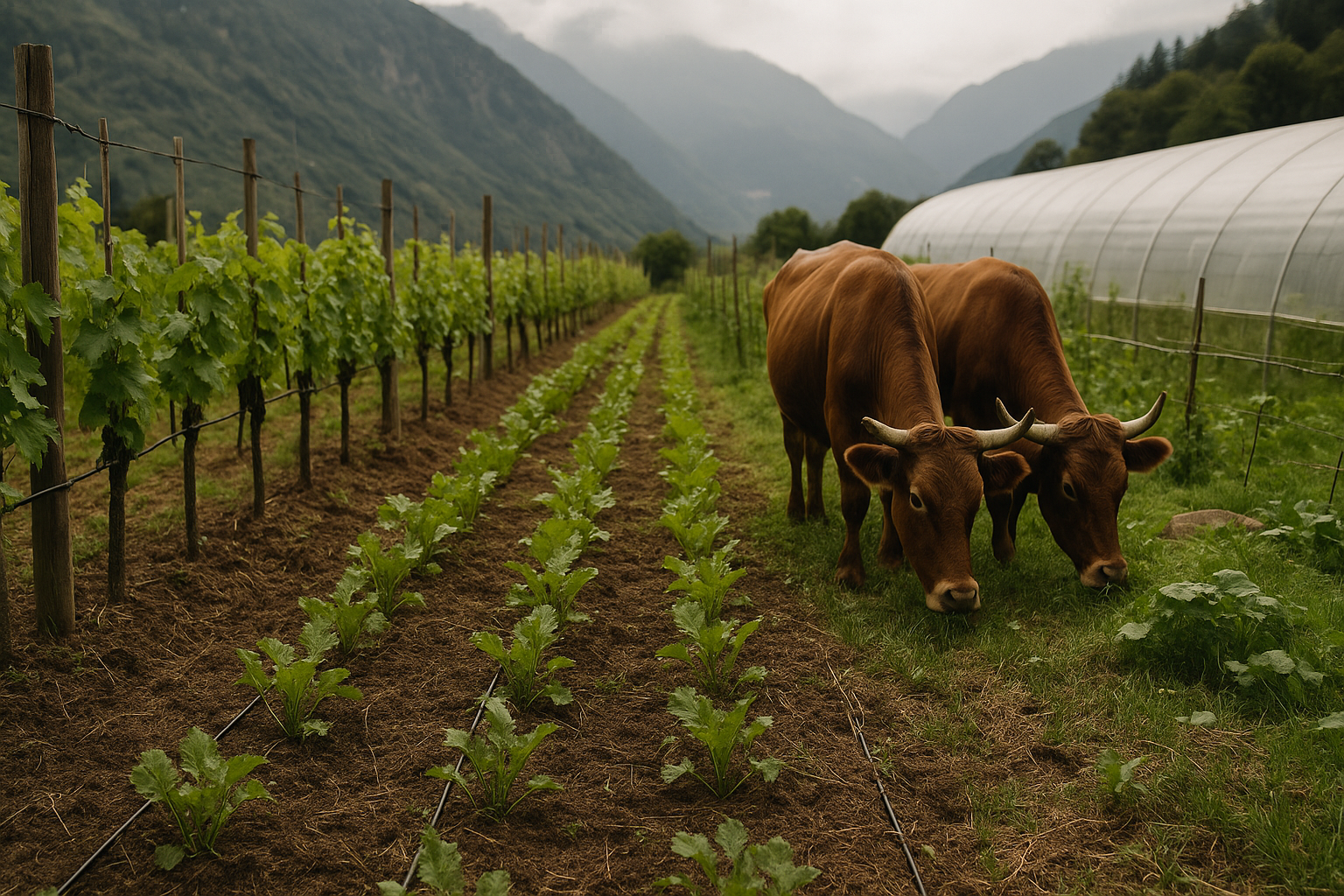
Regenerative agriculture increasingly looks to livestock integration as a tool to improve soil health. In alpine vineyards, a five-year grazing approach with oxen offers a natural experiment to see how herbivore activity shapes soil carbon, structure, and resilience on steep slopes.
The following synthesis translates the study’s findings into practical insights for vineyard managers seeking sustainable, climate-smart practices that support long-term soil health and productivity.
What five years of oxen grazing reveal for alpine vineyards
Over the five-year observation period, oxen grazing in alpine vineyard landscapes was associated with measurable gains in soil organic carbon and improvements in soil structure. These changes can enhance carbon storage while boosting soil porosity and water retention—critical factors for soils exposed to freeze-thaw cycles and variable moisture in high elevations.
The grazing approach leverages natural nutrient cycling and the animals’ trampling to help incorporate organic matter into the soil profile. When managed with appropriate rest periods and stocking rates, it can minimize disturbance while promoting healthier soil habitats for microbes and roots.
These outcomes align with broader regenerative agriculture principles, suggesting that livestock can play a constructive role in maintaining soil health and vineyard resilience rather than being viewed as a competing land use.
How grazing boosts soil carbon and soil structure
Grazing contributes carbon inputs through manure and urine, while pasture residues from cover crops add to soil organic matter. These inputs feed soil microbial communities that build stable soil aggregates, improving structure and pore networks for water and air movement.
Trampling by oxen helps mix surface residues into the topsoil, supporting aggregation and reducing crust formation on sloped sites. At the same time, controlled grazing stimulates plant diversity, which can enhance root turnover and labile carbon inputs, sustaining soil health over seasons.
Grazing patterns and soil biology
The benefits depend on how grazing is timed, the stocking rate, and the length of rest periods. Moderate, well-timed grazing tends to boost root growth and microbial activity, while excessive pressure can compact soils and restrict gas exchange—risks that are especially relevant on steep, fragile alpine soils.
In alpine vineyards, these dynamics may interact with cooler climates and slower decomposition, but the net effect can be a more stable soil structure with higher organic matter levels, contributing to greater resilience to drought and erosion.
Practical takeaways for vineyard managers
Start with small, fenced paddocks adjacent to existing blocks and rotate oxen through seasons to test soil responses without overexposing delicate slopes.
Monitor soil indicators such as surface cover, earthworm activity, and soil moisture to gauge system health. Plan grazing to avoid saturating soils during thawing periods or after heavy rainfall when compaction risk rises.
Integrate grazing with canopy management, irrigation, and vineyard floor management to align animal inputs with viticultural needs and pest and weed control strategies.
Implementation considerations
Grazing in alpine vineyards requires practical infrastructure (fencing, water access), animal care, and labor. Before adoption, perform a small-scale pilot and weigh potential carbon and soil benefits against costs and management demands.
Collaborations with local herders or agroforestry arrangements can help share expertise, reduce risk, and tailor practices to terrain, climate, and grape varieties.
If you work in agriculture, consider exploring a measured grazing approach as part of soil health and carbon stewardship on your land. Start small, monitor key soil indicators, and adjust the plan as you gather on-site evidence.