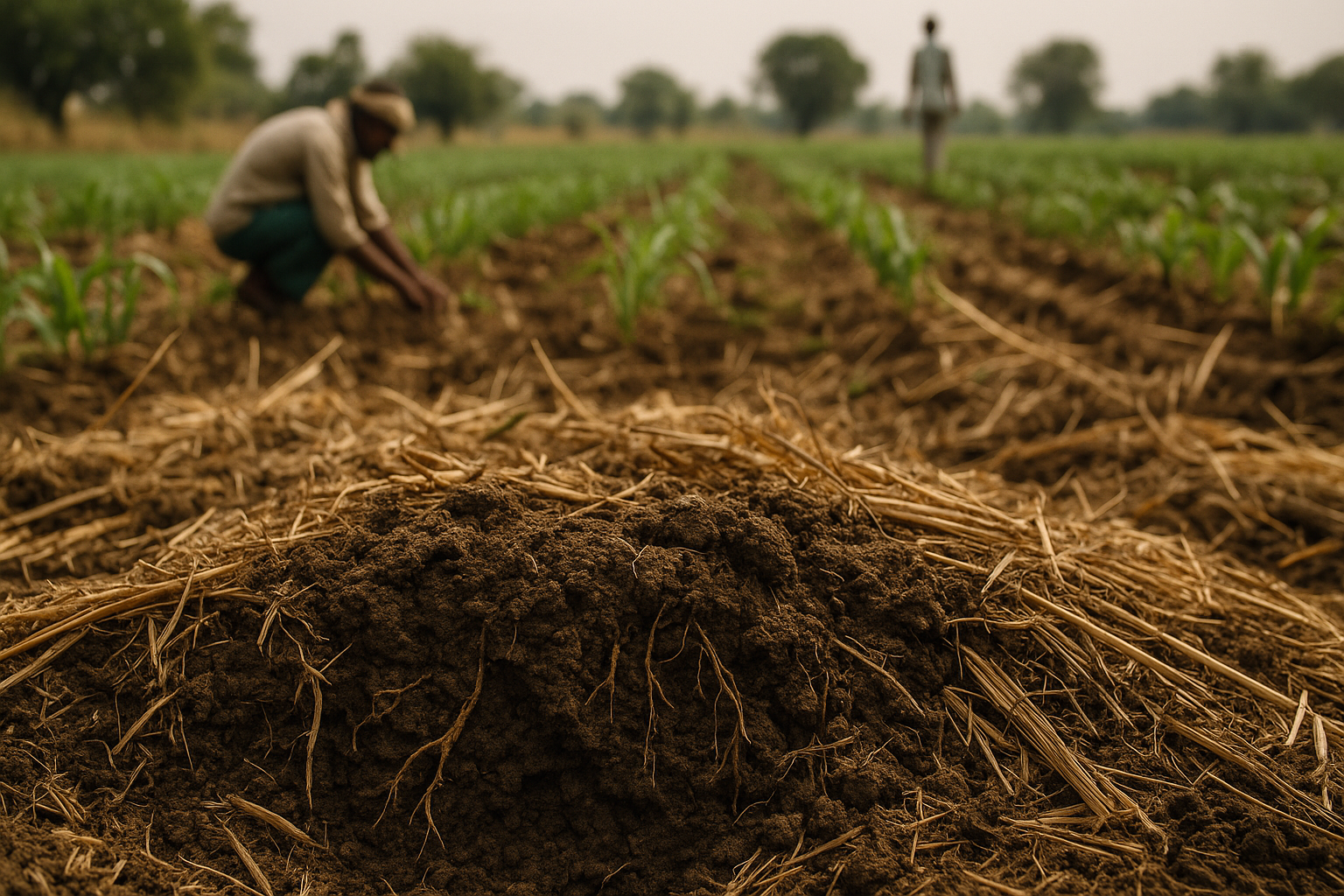
Soil organic carbon (SOC) stores carbon in the soil and is a key driver of soil health, nutrient cycling, and crop resilience. In croplands of western India, SOC dynamics are shaped by climate variability and farming practices. Advances in machine learning offer a way to model SOC under different climate futures and inform smarter management.
This article distills insights from a study that applies machine learning to SOC modeling across western Indian croplands under multiple climate scenarios, translating complex data into practical guidance for farmers and policy planners.
Understanding soil organic carbon and its importance
Soil organic carbon (SOC) is the carbon stored in organic matter in the soil. It improves soil structure, water holding capacity, nutrient availability, and microbial activity, all of which influence yields and sustainability.
In western India, SOC is influenced by monsoon patterns, irrigation, residue management, and crop sequences. Boosting SOC typically requires a combination of cover crops, balanced fertilizer use, and reduced soil disturbance where feasible.
Machine learning helps predict SOC under climate futures
The study uses ML models to link SOC measurements with climate and management data collected from cropland sites across western India. By training on past observations and projecting across various climate futures, the models estimate how SOC could evolve under different temperature and rainfall scenarios.
Such models handle nonlinear relationships and interactions among drivers, offering more flexible predictions than traditional approaches.
Data and methods
Inputs include soil carbon measurements, weather records, soil properties, land use, and management practices. Ensemble techniques like random forests or gradient boosting are common for SOC prediction, with cross-validation used to test robustness across scenarios.
The regional focus matters; the western Indian context shows SOC responses sensitive to rainfall patterns and soil texture, guiding targeted management messages.
Practical implications for farmers and policymakers
The findings translate into concrete actions: prioritize practices that raise SOC, monitor soil carbon over time, and tailor strategies to local climate projections.
For farmers, this can mean residue management, cover cropping where feasible, and soil-conserving practices; for policymakers, data-driven decision tools and farmer training can help communities adapt to climate variability.
As agriculture faces growing climate pressures, integrating SOC-focused modeling into planning can strengthen soil health and resilience on croplands. If you work in agriculture, explore how ML-based SOC insights could inform your soil-management plan and collaborate with extension services to apply data-driven practices on the ground.