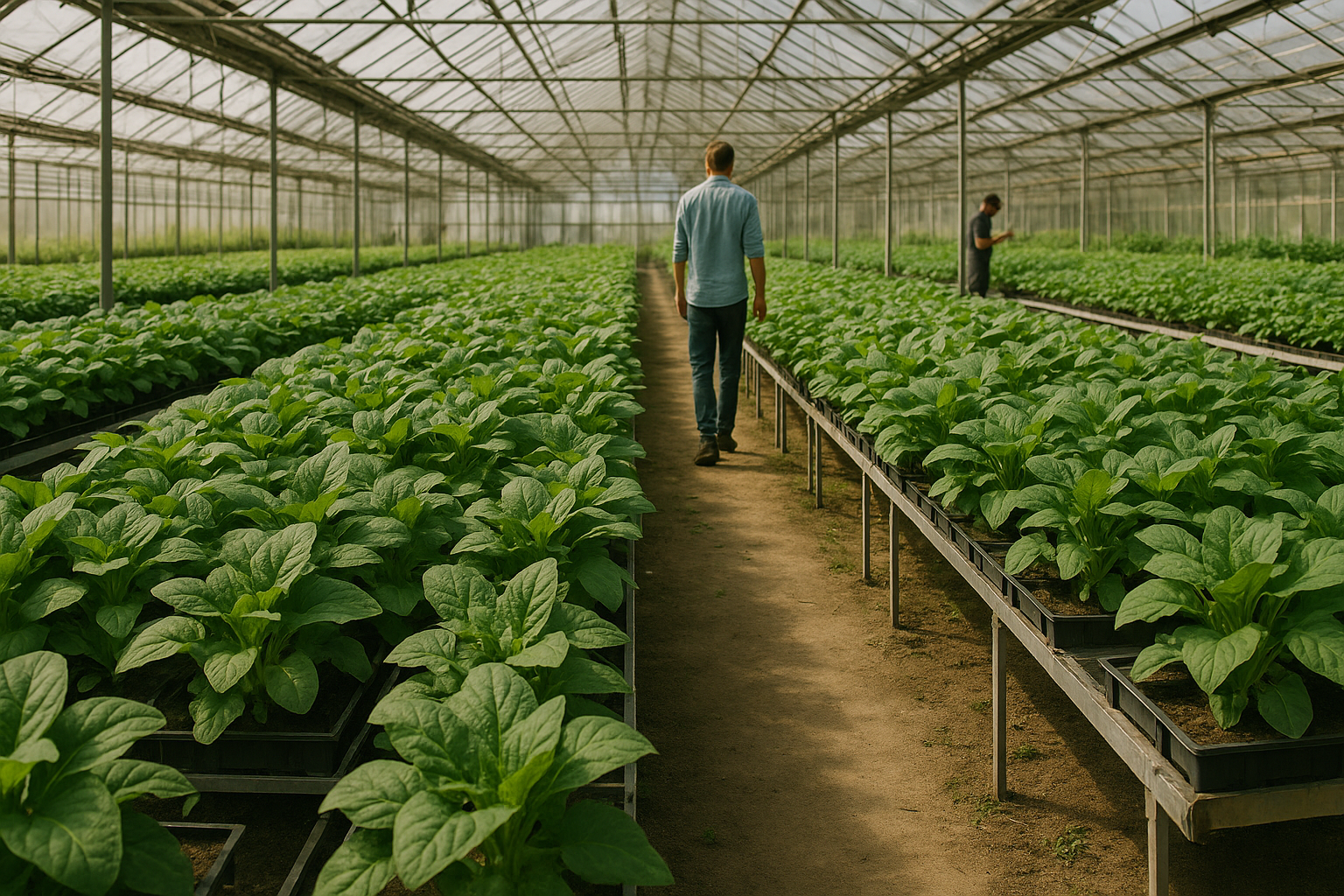
Plant growth point localization is a cornerstone of digital plant phenotyping, enabling researchers and farmers to track where buds, shoots, and growth tips emerge over time. When images from field or greenhouse sensors are analyzed, precise pinpointing supports growth rate assessments, stress detection, and trait measurement. A new optimization idea, described in recent work, uses epoch-based prior annealing to improve how these growth points are located in complex plant images.
This article breaks down the concept in plain language, highlights the potential benefits for crop monitoring, and suggests how farmers and agronomists could see it in practice within precision agriculture workflows.
What epoch-based prior annealing means for growth point localization
Epoch-based prior annealing is an optimization strategy that gradually narrows the search space for growth point locations during model training. By shaping a prior expectation about where growth points can appear and updating it across epochs, the algorithm avoids getting stuck in unlikely spots and reduces errors caused by clutter, occlusion, or lighting.
In plant images, this translates to more stable detection of tips and meristems, especially when multiple plants are in a frame or growth patterns change over time.
How the approach works in simple terms
Think of the method as a guided search that starts with broad expectations about growth location and progressively concentrates on the most probable points as data from more epochs accumulates.
From labs to fields: impact on phenotyping and crop management
Better localization improves trait extraction such as growth rate, leaf emergence timing, and branching patterns, which are used to screen varieties, calibrate irrigation, and forecast yield. The epoch-based prior annealing helps maintain accuracy when images are noisy, when plants are partially hidden, or when the scene contains several specimens.
In a practical pipeline, the approach can slot into existing computer vision tools used in high-throughput phenotyping, reducing manual validation and speeding up data-driven decisions.
Practical tips for adopting this method in farming operations
Consider your imaging setup: consistent lighting, stable camera angles, and clear separation between plants support better localization.
Start with a small dataset to test how the method handles your crops, then scale up to monitor growth over a season.
For farm practitioners aiming to modernize crop monitoring, exploring advanced localization techniques can yield more reliable growth data and smoother integration with precision farming tools. If you work in agriculture, discuss with your tech team how improved growth point detection could enhance irrigation planning, fertilization timing, and harvest scheduling this season.