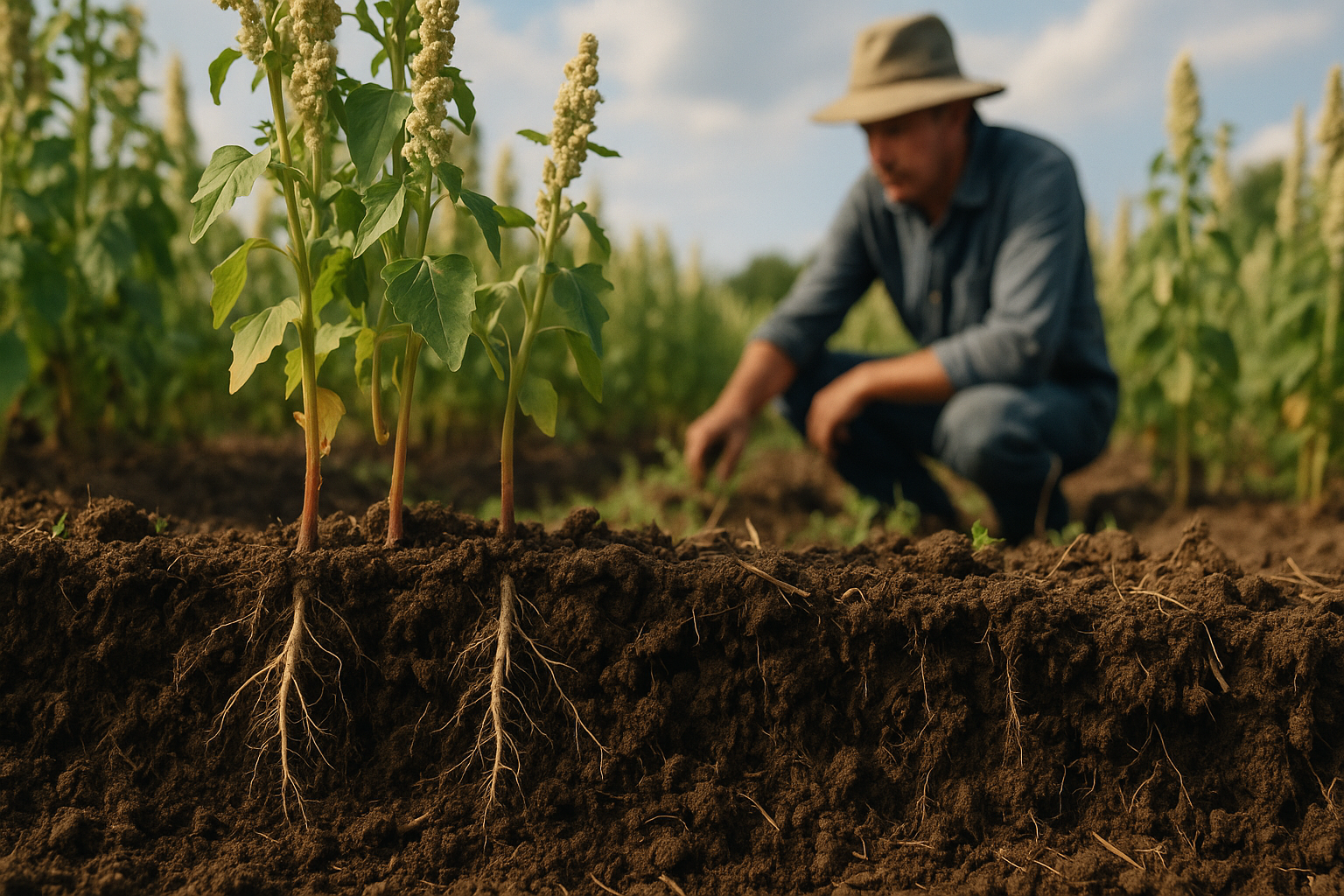
Heat waves and soil contamination present rising challenges for crop health and food safety. Quinoa, with its versatility and nutrient density, is increasingly grown in diverse soils, but extreme temperatures and arsenic exposure can alter its physiology and potential health implications for consumers.
This article translates the key insights from a recent study into actionable takeaways for farmers, agri-tech professionals, and agronomists working in warmer regions or marginal soils.
Heat stress, arsenic soil, and quinoa health in the field
In hot conditions, quinoa’s photosynthesis and water use efficiency can be disrupted, affecting growth and yield. Arsenic in soil can impact root function and may accumulate in edible parts depending on soil chemistry and plant age. When heat stress and arsenic are present together, their effects can interact, potentially shifting nutrient uptake, hormone balances, and stress responses.
Understanding these interactions helps growers anticipate performance and tailor management, from irrigation scheduling to soil amendments and harvest timing.
For consumers, the study underscores the need to monitor soil quality and processing steps that can influence contaminant transfer and nutritional quality.
Physio-biochemical responses in quinoa under stress
Quinoa adapts to heat through changes in leaf temperature regulation, pigment content, and antioxidant defenses. Arsenic exposure triggers oxidative stress, prompting protective enzymes and compatible solutes that help the plant cope.
Such stress responses can alter primary metabolites and secondary compounds, with potential implications for grain quality, flavor, and nutritional value.
The study’s results help explain how heat and arsenic shape quinoa’s biochemistry, guiding breeding and crop management toward more resilient varieties.
Key physiological indicators
During stress, researchers often measure gas exchange, photosynthetic rate, chlorophyll content, and root architecture to gauge plant health.
Biochemical markers and grain quality
Common markers include antioxidant levels, osmoprotectants like proline, and mineral content that can reflect grain quality and safety.
Implications for human health and safe consumption
Arsenic in soils can transfer to crops, and heat stress can influence uptake and species form, affecting potential human exposure. While quinoa’s safety depends on multiple factors, careful soil management reduces risk.
Public health relevance hinges on monitoring arsenic speciation and ensuring processing steps mitigate contaminants while preserving nutrients.
Practical farming strategies for resilient quinoa
Practical strategies include selecting arsenic-tolerant or low-uptake quinoa varieties, applying soil amendments that reduce arsenic availability, maintaining adequate irrigation to buffer heat, and timing planting and harvesting to avoid peak stress.
Farmers should collaborate with extension services, test soils regularly, and adopt climate-smart practices to sustain yields and product safety.
Farmers and agronomists: stay proactive with soil testing, heat management, and safe quinoa practices to protect yields and consumer health. Reach out to local extension services and adopt climate-resilient farming methods in your fields.