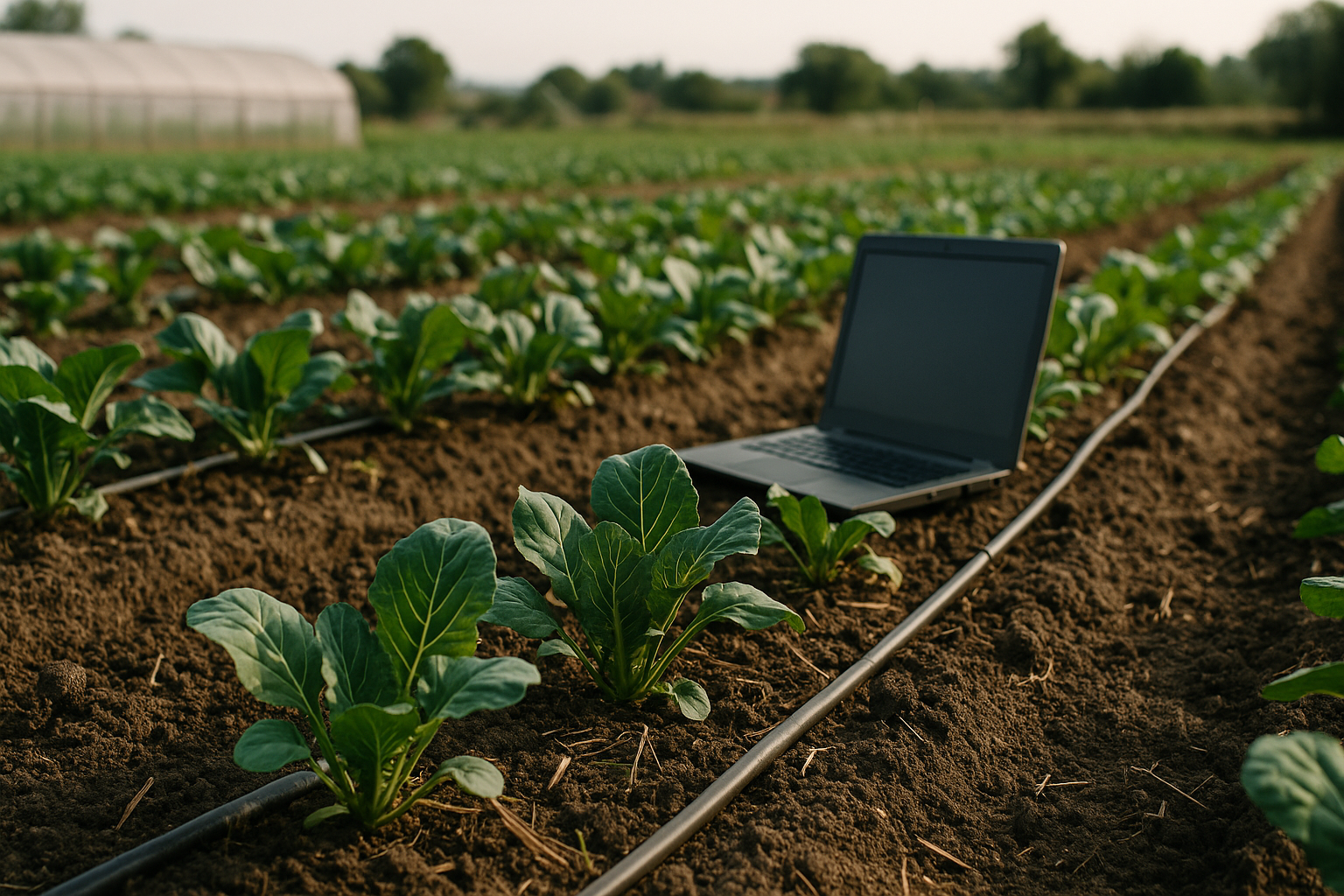
Soil ecosystems host diverse microbial communities that drive nutrient cycling, plant health, and resilience against stress. Modern machine learning helps synthesize complex signals from soil data, turning messy measurements into actionable insights for sustainable farming.
This article summarizes approaches that use ML to track microbiome dynamics and assess bio-sustainability—the capacity of soil communities to support productive, environmentally friendly crop systems.
Unpacking the soil microbiome with machine learning
Soil metagenomic data and microbial counts are high-dimensional and time-dependent. Machine learning can detect patterns, link microbial shifts to environmental drivers, and forecast changes in soil functions such as nutrient cycling and disease suppression.
The methods span supervised and unsupervised techniques, from tree-based models to neural networks, applied to tasks like predicting functional potential, identifying key taxa, and mapping microbial networks under different management practices.
Key ML techniques for soil data
Common tools include random forests, gradient boosting, and neural networks; each has strengths for handling nonlinear relations and sparse, noisy data typical of field samples. Data quality and proper validation are essential to avoid overfitting.
From data to bio-sustainability: translating findings into practice
Linking microbial dynamics to bio-sustainability means connecting model outputs to outcomes such as improved nutrient use efficiency, reduced synthetic inputs, and resilience to drought or heat.
The study outlines how practitioners can translate model results into decision-support, for example through indicators that farmers can monitor with sensors and soil tests, informing crop rotation, amendments, and irrigation strategies.
Practical implications for farmers and researchers
For researchers, standardizing data collection and sharing accelerates progress; for farmers, ML-guided insights should be packaged in actionable tools and simple dashboards that integrate with existing farm management systems.
Collaborations between agronomy scientists, soil microbiologists, and growers can unlock real-world benefits, from healthier soil microbiomes to more sustainable yields and lower environmental impact.
If you work in agriculture, start with a small pilot of ML-supported soil monitoring this season—collect a few soil samples over time and pair them with simple predictors to see how microbial signals align with crop performance.
Interested in applying these insights on your farm? Consider starting with a small pilot project to monitor soil microbiome changes alongside crop performance and see how ML-guided indicators align with your yields and inputs.