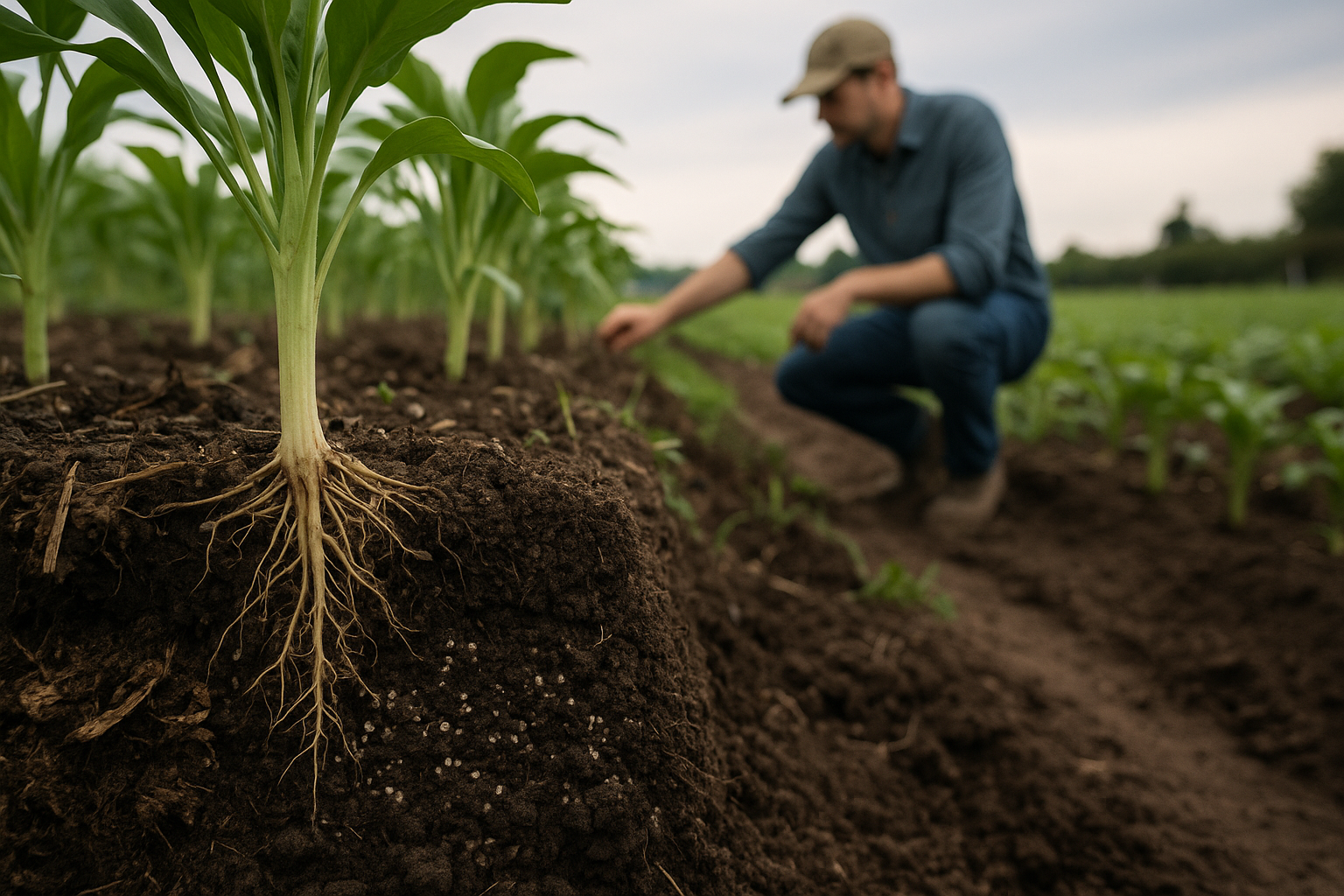
Soil harbors a vast and invisible community that underpins nutrient cycling, plant health and resilience. Understanding how farming practices sculpt this microbiome helps explain why some soils stay productive year after year. In particular, the way organic amendments are added and how soil texture governs water and pore structure can shift microbial life in meaningful ways.
Below we translate key ideas into practical guidance for farmers and agronomists, focusing on two main drivers: organic inputs and the physical makeup of the soil. The aim is to support a thriving soil life that supports crops, reduces stress, and contributes to long‑term soil health.
Organic amendments as a driver of soil microbial life
Organic amendments such as compost, well‑decomposed manure, and plant residues supply carbon and nutrients that fuel soil microbes. When microbes access this material, communities often become more diverse and shift toward organisms that break down organic matter, release nutrients, and form beneficial partnerships with plants. The exact response depends on the type, quality, and rate of the amendment, as well as how it is incorporated into the soil.
Managing amendments with care matters. Too much or poorly matured material can lead to nutrient pulses, imbalances, or unintended greenhouse gas emissions. Effective management means tailoring the input to crop needs, soil test results, and the timing of field operations to balance microbial benefits with environmental considerations.
Soil texture: a physical stage for microbial players
Soil texture shapes the habitat where microbes live by influencing moisture retention, aeration, and pore connectivity. These physical characteristics affect how rapidly amendments are processed, how nutrients move, and how microbial groups interact with plant roots and each other.
Clay‑rich soils tend to support stable aggregates and can retain organic matter longer, creating a hospitable environment for a diverse microbial community. In contrast, sandy soils drain quickly and may lose substrates faster, leading to different microbial responses to the same amendment. Recognizing these texture‑driven differences helps tailor management to local conditions.
Putting it into practice on the farm
To support a healthy microbiome, align amendments with soil texture, monitor soil moisture, and aim for steady inputs rather than large, infrequent applications.
In practical terms, consider pairing a matured compost with shallow soil incorporation at crop establishment and adjust rates based on soil tests and crop needs. The goal is to feed the soil life without creating excessive nutrient pulses that could offset the balance of microbial communities.
Choosing amendments based on soil texture
In clay‑rich soils, use well‑composted organic matter to help stabilize aggregates and protect microbial habitats. In sandy soils, more frequent, lighter applications can help retain moisture and nutrients and sustain microbial activity between waterings.
Timing and rate for microbial benefits
Schedule inputs to avoid large nutrient surges between crops, and align applications with irrigation and weather. Use soil tests to tailor rates and consider integrating microbial inoculants as a supplementary tool rather than a sole solution.
Interested in applying these ideas on your fields? Start with a soil test, try a modest organic amendment, and monitor yields and soil life over a season. Share your experiences with your network or our agronomy community to help others grow healthier soils together.