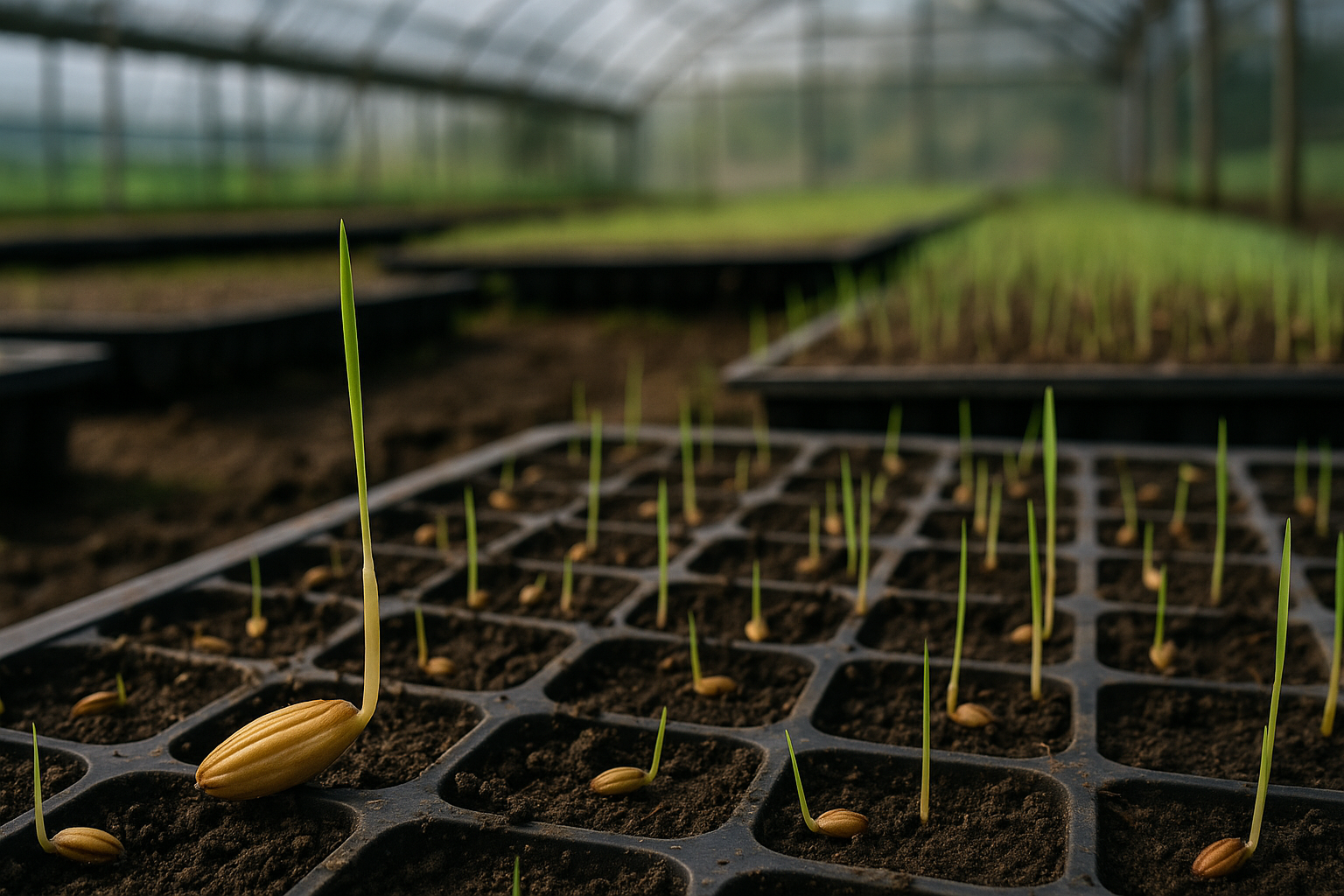
In rice cultivation, seed germination timing is a critical determinant of stand establishment and yield. Temperature fluctuations at sowing can shift germination and early vigor. A study explores how a molecular feedback loop between two rice genes—OsFTIP9 and OSH1—tunes germination in a temperature-dependent way.
The researchers show that OsFTIP9 and OSH1 reinforce each other’s activity, creating a robust switch that responds to ambient temperature. By describing this loop in accessible terms, the findings can be translated into breeding and field-management ideas for climate-resilient rice.
Unraveling the OsFTIP9–OSH1 loop in rice germination
The work centers on two key players. OsFTIP9 is linked to transport or signaling processes that influence germination timing, while OSH1 is a developmental regulator guiding when seeds exit dormancy. The core idea is a positive feedback: each component boosts the other’s signal, strengthening the germination cue as conditions change.
Temperature shapes the loop’s strength. At favorable temperatures, the feedback can be self-reinforcing, leading to more synchronized germination; under less favorable heat or cold exposure, the loop activity wanes, delaying germination and allowing seeds to wait for better conditions.
Mechanistic insights
On a molecular level, OsFTIP9 may influence signaling molecules or networks that feed into OSH1 action, while OSH1 can regulate downstream genes tied to growth and metabolism. When both reinforce each other, a threshold-like switch is crossed, committing the seed to germination once temperature conditions align. The temperature sensitivity likely arises from how each component responds to warmth or cooling cues, creating a tunable system rather than a simple on/off switch.
Implications for breeding and farming
For breeders, the pair presents tangible targets to shape germination timing across temperature ranges. Selecting variants with a steadier OsFTIP9–OSH1 interaction or adjusting the temperature responsiveness of either gene could yield rice lines that germinate more reliably in climates with variable early-season temperatures.
For farmers and seed producers, the implications include smarter seed treatments and cultivar choices. Traits that stabilize germination under heat waves or cool spells can reduce uneven establishment, improve stand counts, and help manage risk in changing growing seasons.
Practical takeaways for farmers and agronomists
Takeaway: pairing temperature-aware sowing strategies with cultivars that show balanced germination responses can boost early vigor. When selecting varieties, look for lines with reliable germination across the local temperature window.
Seed suppliers and extension services may, in time, offer germination guidance tailored to regional heat and cold patterns, informed by studies like this. Integrating these ideas with existing seed priming and field-management practices can help reduce stand gaps after planting.
For practitioners in agriculture, keeping abreast of molecular advances that influence germination can translate into real field gains. Discuss temperature-smart germination traits with your seed suppliers and agronomists as you plan the season ahead.