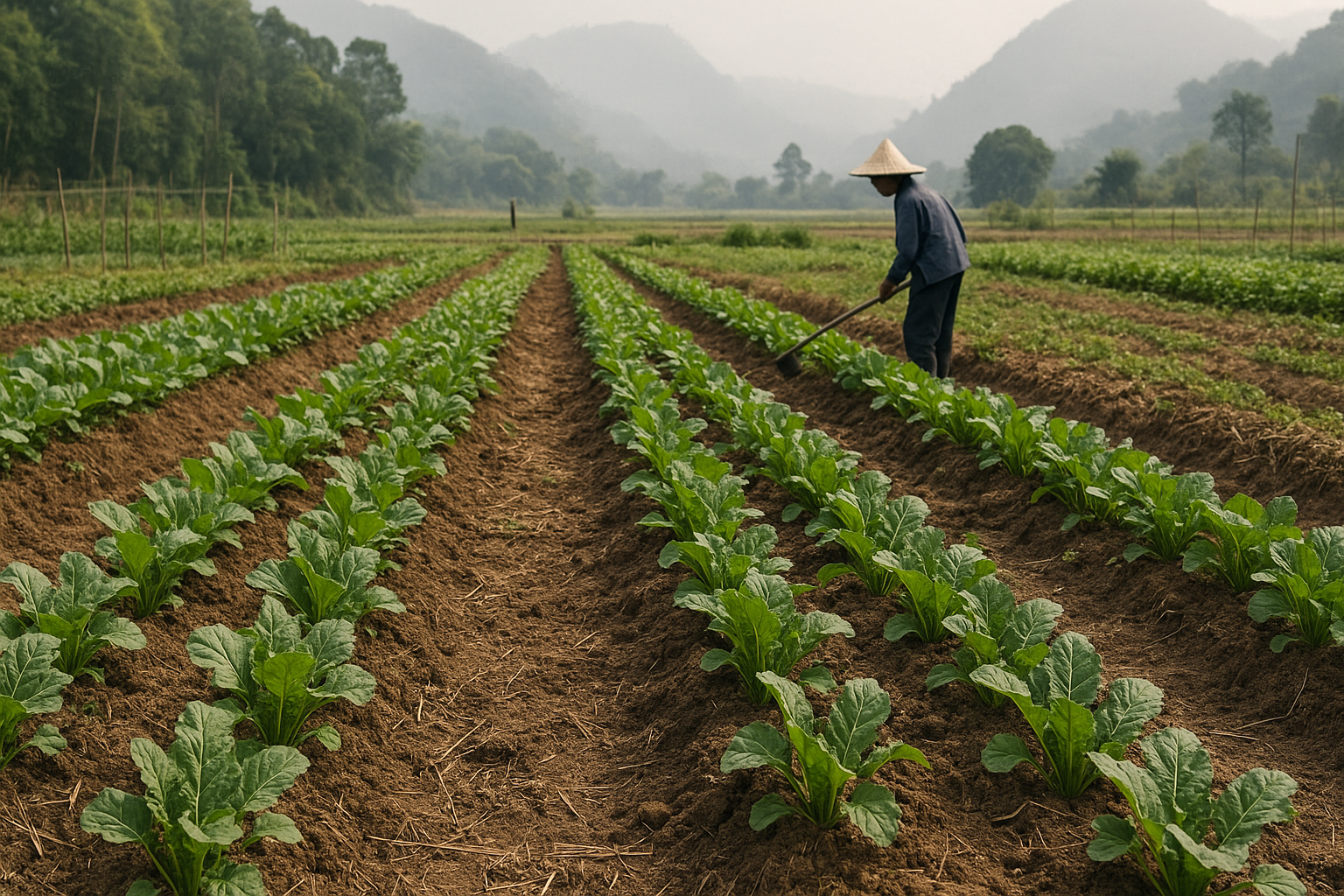
Soil health is essential for sustainable farming and safe harvests. In landscapes where land uses vary—from crop fields to forests to settlements—pollution from trace elements and fluoride can accumulate in the topsoil, impacting crop safety and soil function.
A recent assessment in southern China’s hilly region examined how different land uses relate to contaminant levels and general soil quality, offering practical insights for farmers and land managers seeking to protect productive soil while managing pollution risk.
Across land uses: trace elements and fluoride in soils
Samples were collected from diverse land-use categories representative of the region, including agricultural, natural forested areas, and urban or peri-urban sites. The analysis focused on a set of common trace elements (such as arsenic, cadmium, lead, and zinc) along with fluoride, all evaluated against soil quality indicators.
The results revealed clear differences in contaminant levels linked to land use and underlying geology. Some sites showed elevated trace element concentrations and fluoride that exceeded typical background levels, signaling potential risks for soil functions and crop safety in those areas.
What was measured
In addition to contaminant concentrations, the study used straightforward soil health indicators—like pH, organic matter content, and nutrient availability—to gauge overall soil quality and to help interpret pollution patterns in context of soil fertility.
How land use shapes soil quality and pollution risk
The comparison across land uses highlighted how farming practices, nearby industry, and natural soil properties combine to influence contaminant buildup. Agricultural lands tended to reflect inputs from fertilizers and amendments, while industrial-adjacent or urban-influenced sites showed higher fluoride and trace metals, depending on local sources.
The take-home message is that land-use planning and targeted soil management can mitigate risks. Where contaminants are more likely, farmers can adjust management in ways that support soil health and reduce crop exposure to harmful elements.
Implications for farming and soil management
For farmers, the study underscores the value of regular soil testing and stepwise remediation. Simple actions—such as optimizing liming to balance soil pH, adding organic matter, and careful fertilizer choices—can help stabilize soil quality even when some pollution is present.
Beyond on-field practices, land-use decisions at the landscape level matter. In zones with higher contamination risk, integrating buffer zones, phytoremediation where appropriate, and monitoring programs can safeguard long-term productivity while protecting environmental and public health.
Methods and indicators at a glance
To build a robust picture, researchers collected soil samples across the study area and analyzed them for a targeted panel of trace elements and fluoride. The study paired these measurements with standard soil-health indicators to capture both contamination and soil function in a single assessment.
Sampling and analysis
Soil samples were gathered from multiple plots within each land-use type and analyzed with widely used analytical techniques to quantify metal elements and fluoride. Quality checks ensured reliable comparisons among sites.
Soil health indicators used
Indicators such as pH, organic matter, and nutrient availability complemented contaminant data, helping to interpret risk levels and guide practical management decisions for soil stewardship in the region.
Understanding how land use affects soil contaminants helps farmers tailor management to protect soil health and crop safety. If you work in agriculture, consider regular soil testing, align practices with local advisories, and collaborate with extension services to design a pollution-aware soil strategy for your fields.