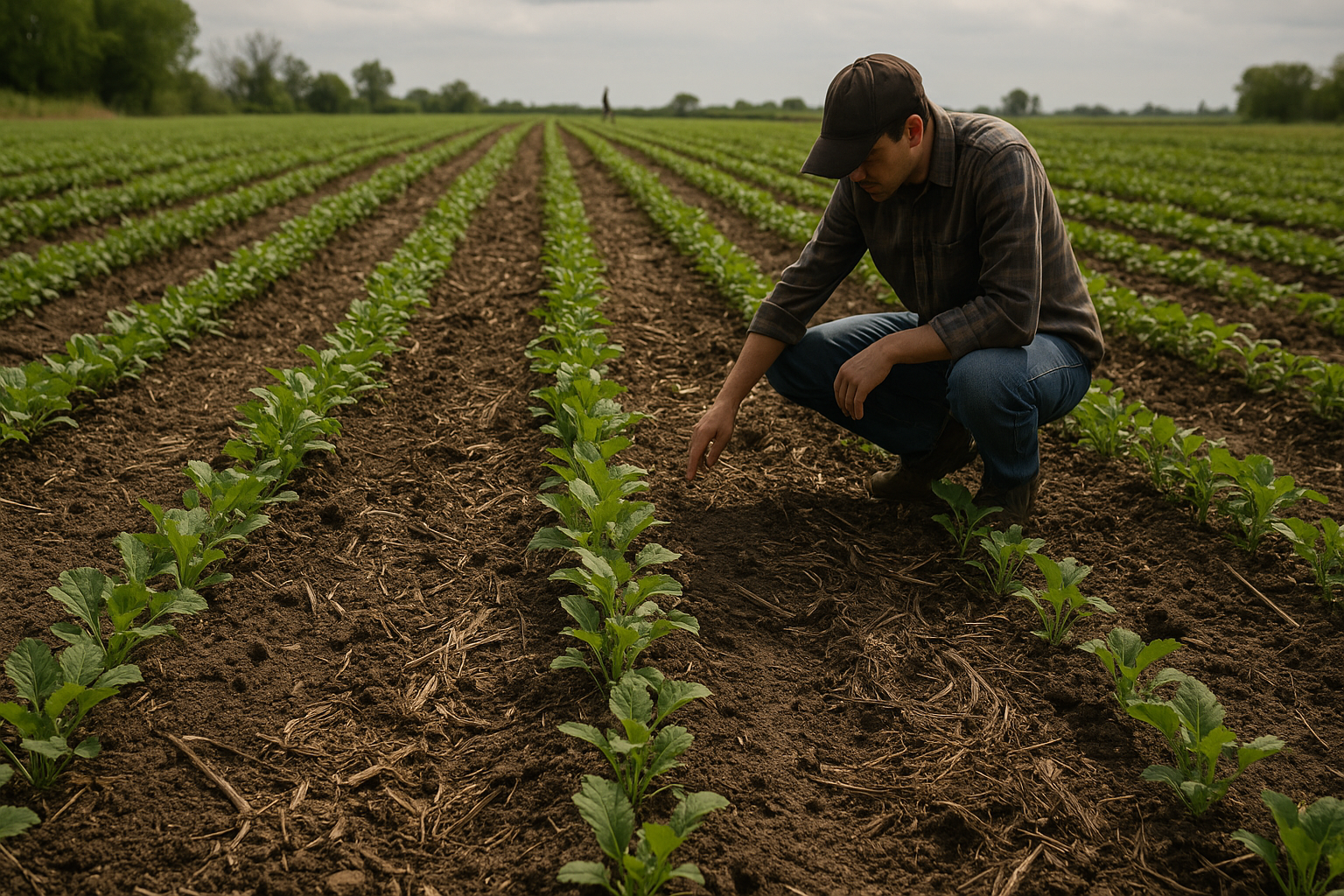
Soil health is the foundation of productive, resilient farming. A new approach that examines how quickly organic matter breaks down offers a concise view of the soil’s living biological community and its nutrient cycling. This article translates the core idea into practical steps for farmers and agronomists.
By measuring the decomposition rate of standardized organic material, we can infer microbial activity, carbon turnover, and the soil’s capacity to support crops across seasons. Here’s how this method works, why it matters, and how to apply it in the field.
Understanding what the decomposition test measures
The method focuses on the pace at which organic matter loses mass or releases carbon under defined conditions. This rate mirrors the activity of the soil food web that drives nutrient release and soil structure. A higher rate typically signals a lively microbial community and favorable conditions, while slower rates can indicate constraints such as low microbial biomass, soil acidity, or compaction.
To put the test into practice, researchers may use standardized substrates or litter placed in the soil and monitored over a fixed period. The goal is to produce a simple, reproducible metric that can be read alongside other soil health indicators. It’s important to view decomposition rate as one dimension of soil health and to consider local factors such as climate, residue type, and moisture.
Why this method matters for soil health management
Soil health assessments benefit from metrics that integrate microbial activity, substrate quality, and physical conditions. Organic matter turnover provides an integrative signal because it combines biological activity with the environmental context. This makes the test a practical indicator for farm decision-making.
For growers, applying the test can support decisions around cover crops, compost amendments, or reduced tillage. Regular measurements help detect improvements or declines across seasons, guiding adjustments to management plans and resource use.
How to apply the test on the farm
On-farm sampling and setup
Start with representative soil samples from the fields of interest. Use a fixed soil volume and moisture range, and place a standardized organic material (for example, a simple cellulose-based substrate or leaf litter) in perforated bags or sleeves. Treat each sample under similar environmental conditions to ensure comparability.
Interpreting results for decision making
After a defined incubation period, retrieve the test materials and assess mass loss or carbon release (for example, CO2 production). Compare results against baseline measurements or reference ranges to gauge whether microbial activity is high, moderate, or limited. Always interpret results in context: soil texture, climate, crop history, and management practices influence the outcome.
Implications for sustainable farming and soil management
The decomposition-based indicator offers a practical way to track soil vitality over time and in response to management. When used alongside conventional soil tests, it can help refine strategies that boost organic matter turnover, improve nutrient cycling, and support soil structure. This aligns with sustainable farming goals such as higher resilience and reduced input needs.
For professionals in agriculture, consider incorporating this decomposition assessment into your soil-monitoring plan. Start with a small pilot in a representative field, track trends across seasons, and use the findings to tailor cover cropping, composting, and tillage practices. Share learnings with local extension services to help build broader soil-health insights.