Advances in agriculture increasingly rely on scientifically grounded insights that translate complex data into practical steps for farms of all sizes. This article distills a recent publication on agriculture into actionable takeaways for growers, agronomists, and extension agents.
By focusing on systems-level approaches—soil health, water efficiency, and crop management—the study highlights how coordinated practices can raise productivity while reducing inputs and environmental footprint.
Key findings and practical implications
The study examines how integrating soil health management with efficient water use and diverse crop rotations can influence yield stability and resource use. Across multiple farm-like settings, combining these elements tended to improve both short-term outputs and long-term soil quality.
Results indicate that increasing soil organic matter enhances moisture retention, nutrient cycling, and microbial activity, which together support better root development and resilience to drought. Efficient irrigation and scheduling further reduce water losses without compromising yields.
Soil health as a foundation
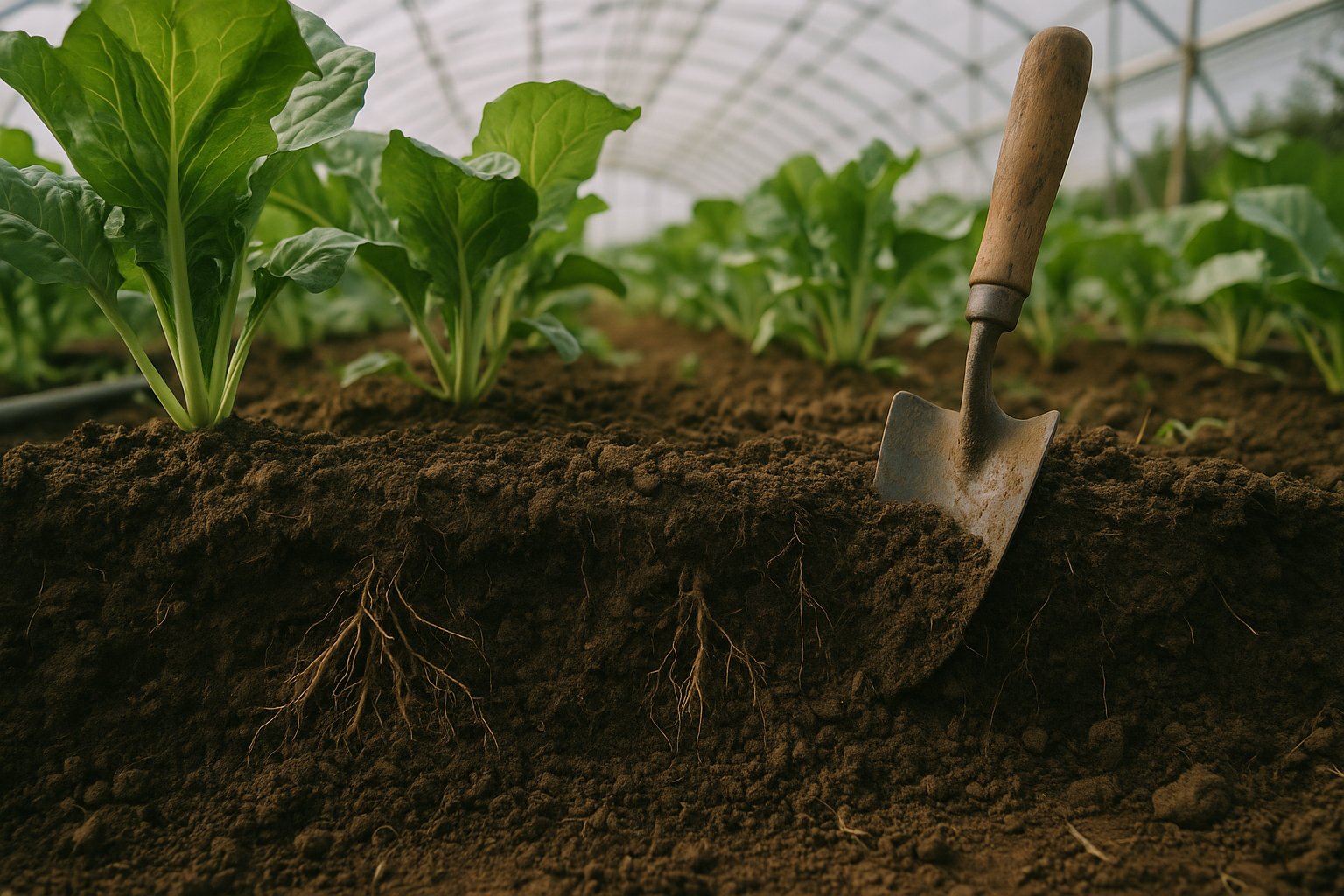
Healthy soils store more water, feed crops with steady nutrients, and create a living infrastructure that supports sustainable production. Even modest improvements can translate into meaningful gains in yield consistency, especially under variable weather.
Strategies for on-farm implementation
For practical adoption, the publication suggests a phased approach: start with soil testing, then introduce cover crops or legumes to build organic matter, and gradually adopt precision irrigation to match crop needs. Rotations that include deep-rooted and nitrogen-fixing species can reduce pest pressure and decrease fertilizer dependence.
To maximize impact, farmers should tailor plans to local climate, soil type, and market constraints, while tracking simple indicators such as soil moisture profiles and yield trends. Extension services and farmer cooperatives can play a key role in sharing tools and knowledge.
Future outlook and climate considerations
As climate variability grows, the study reinforces the value of adaptable practices that boost resilience: soil-first strategies, water-smart management, and diversified cropping. These elements work together to cushion farms against droughts and heat stress while supporting steady productivity.
Policy and research collaborations can help scale these approaches, providing affordable inputs, technical assistance, and monitoring frameworks that enable farms of all sizes to participate in sustainable agriculture trends.
Whether you operate a small plot or a multi-field operation, adopting a systems-based approach to soil health, water use, and crop management can translate science into real-world gains. Start with a soil test, choose a farm-scale pilot, and connect with local extension services to move toward more sustainable, resilient farming.